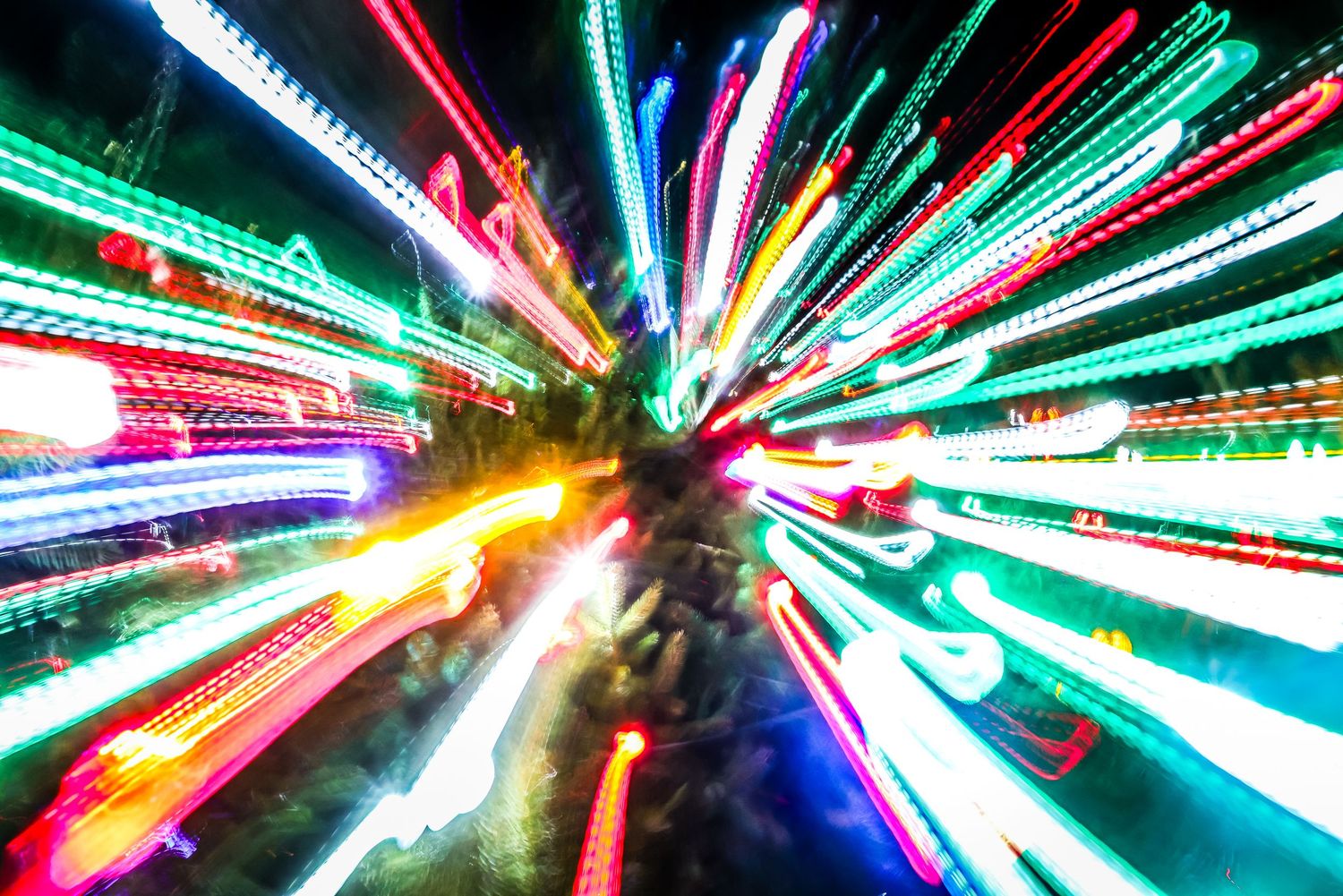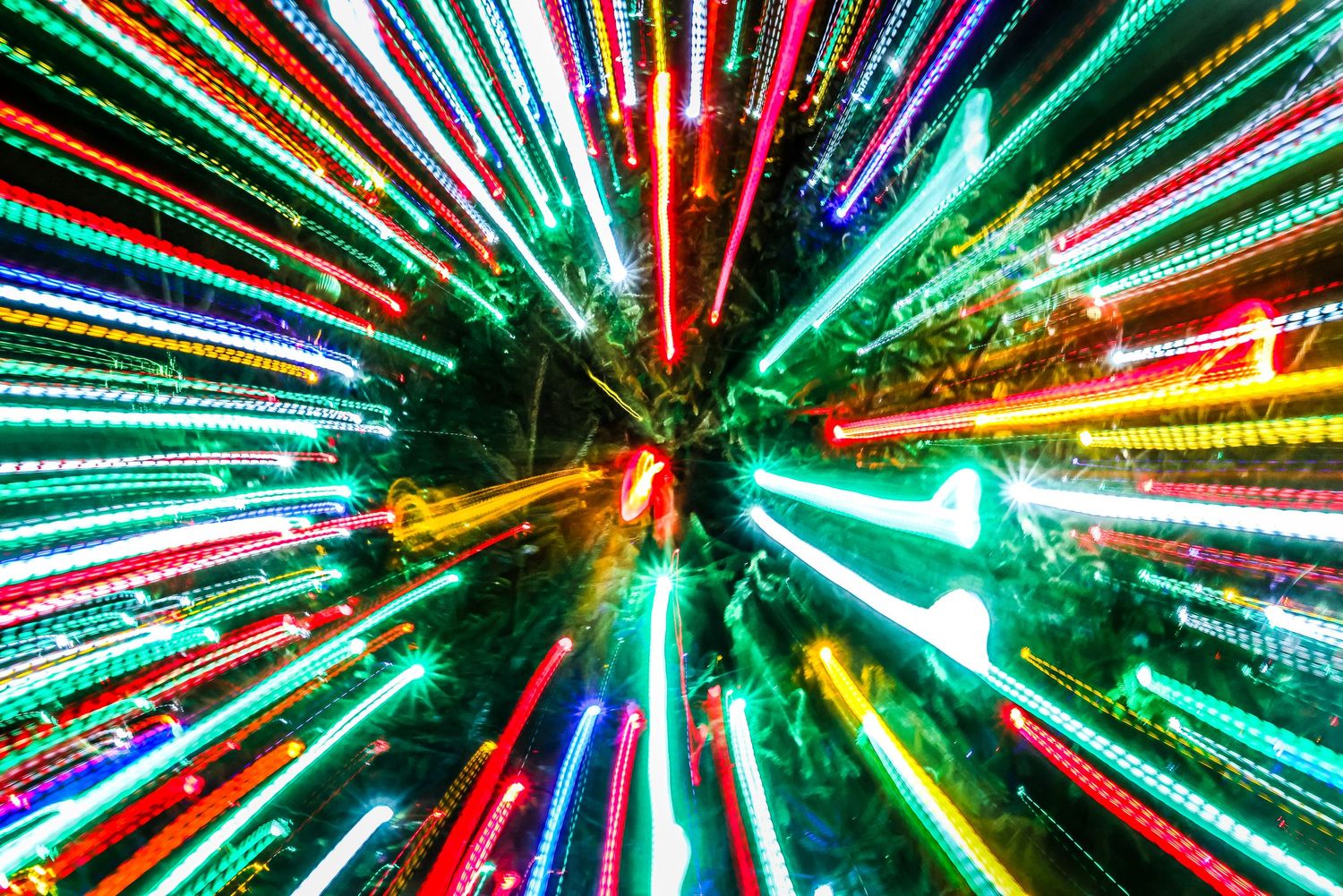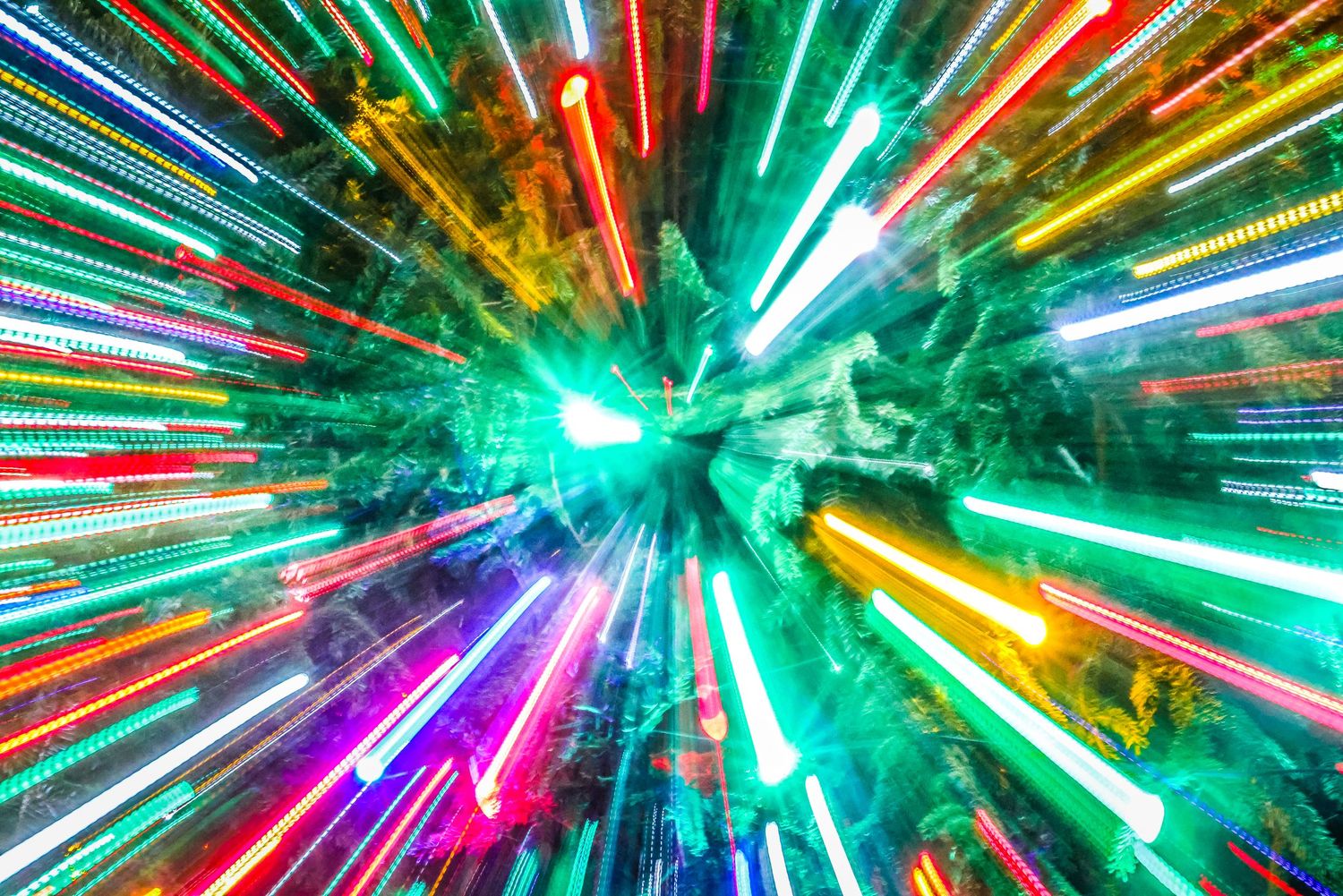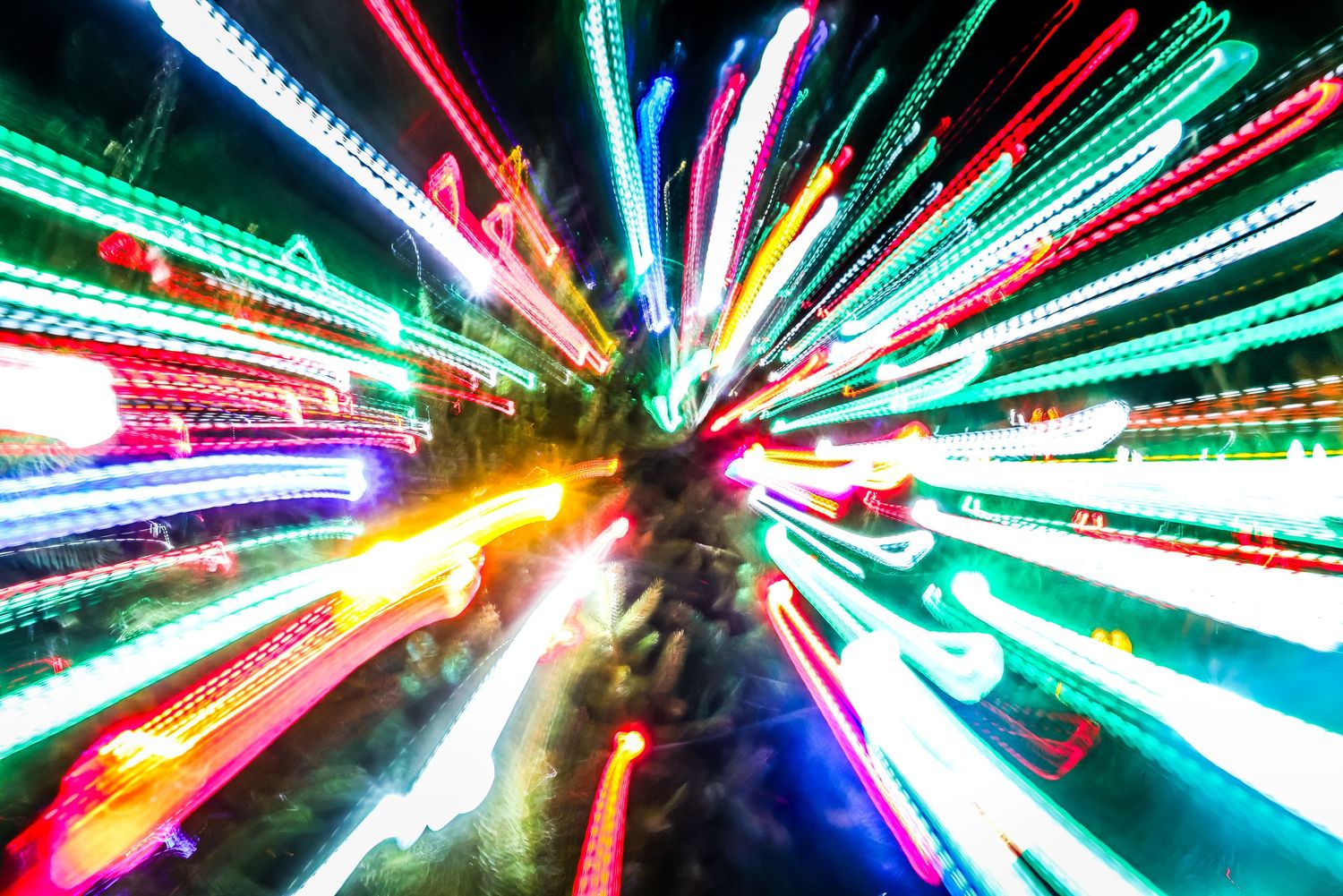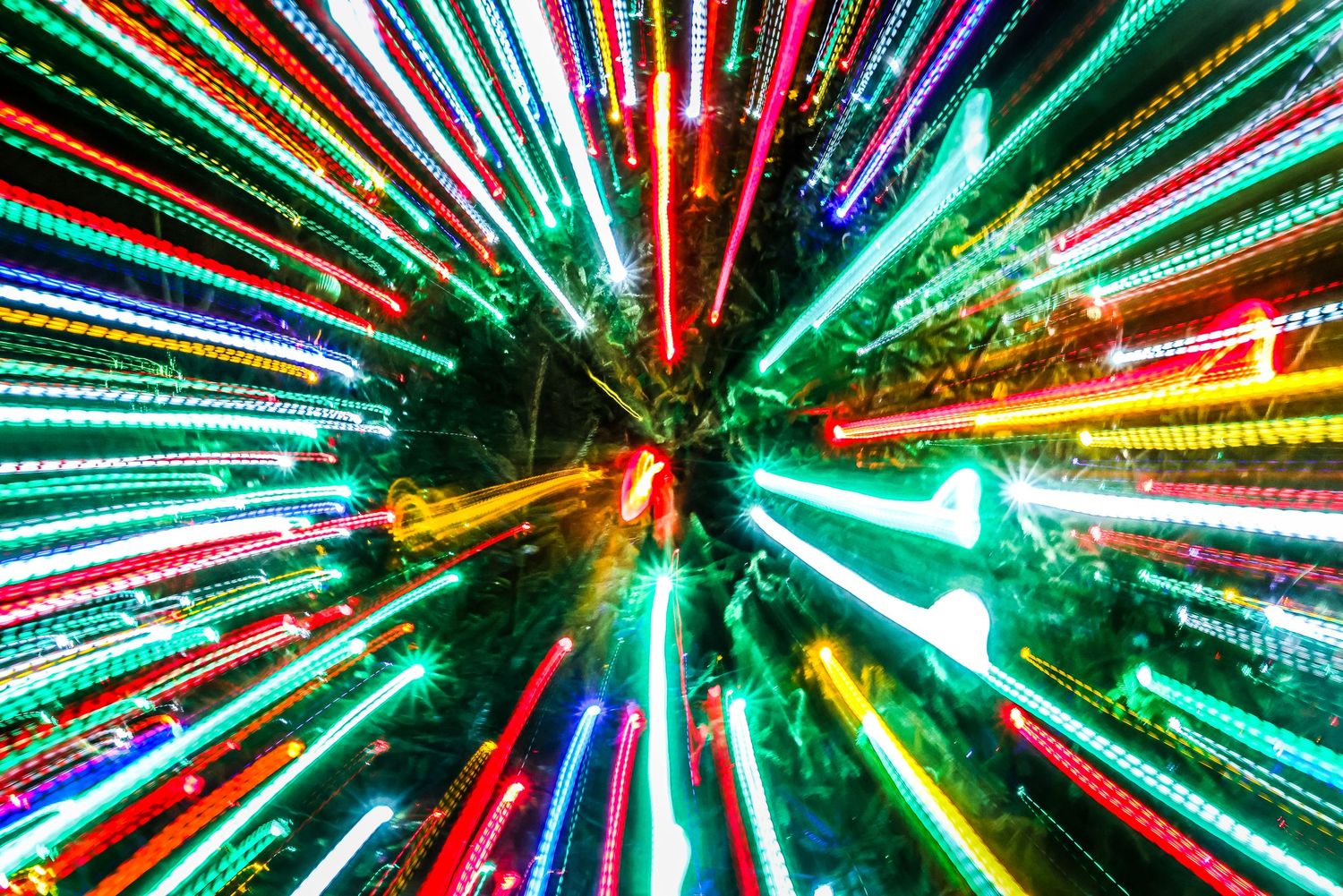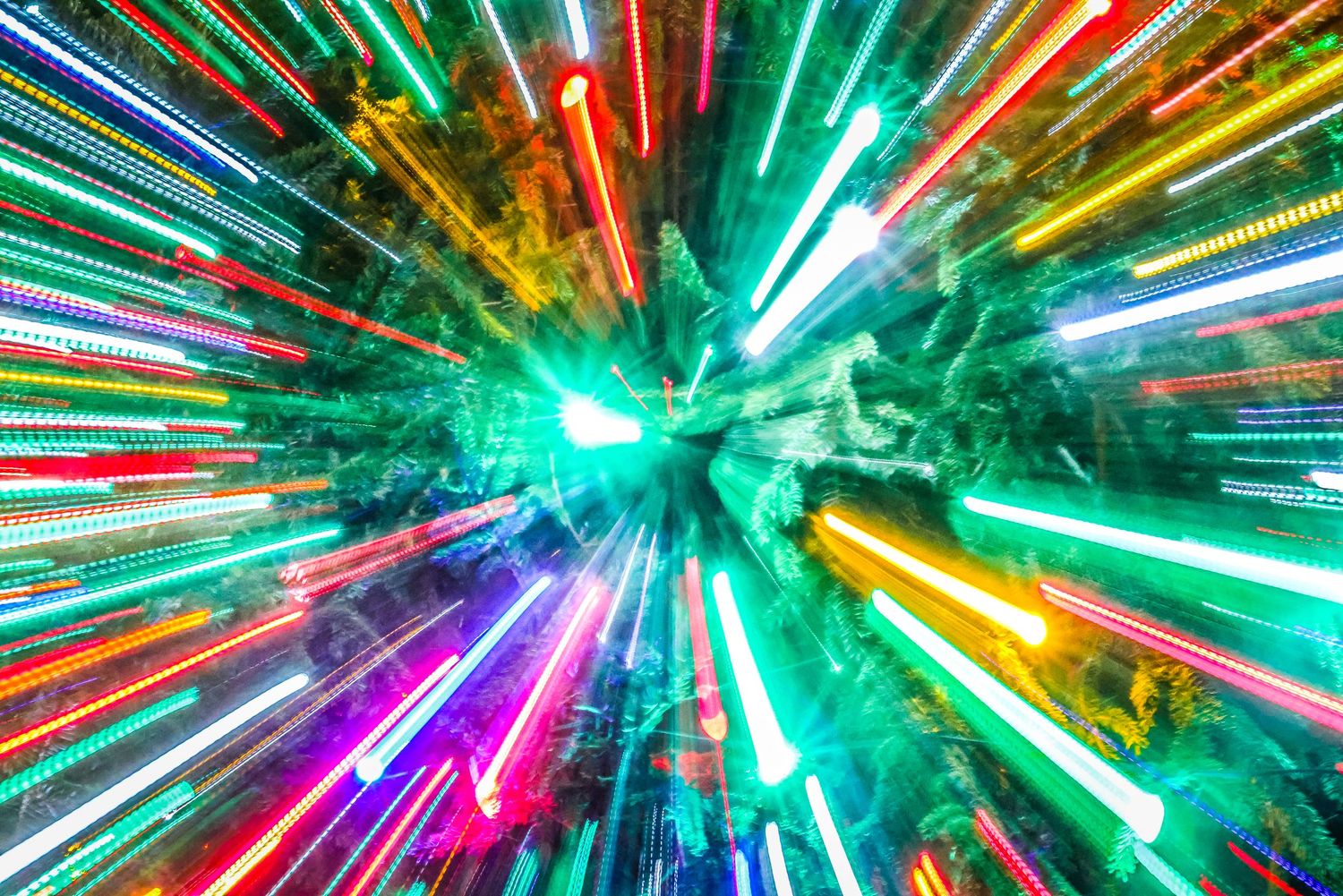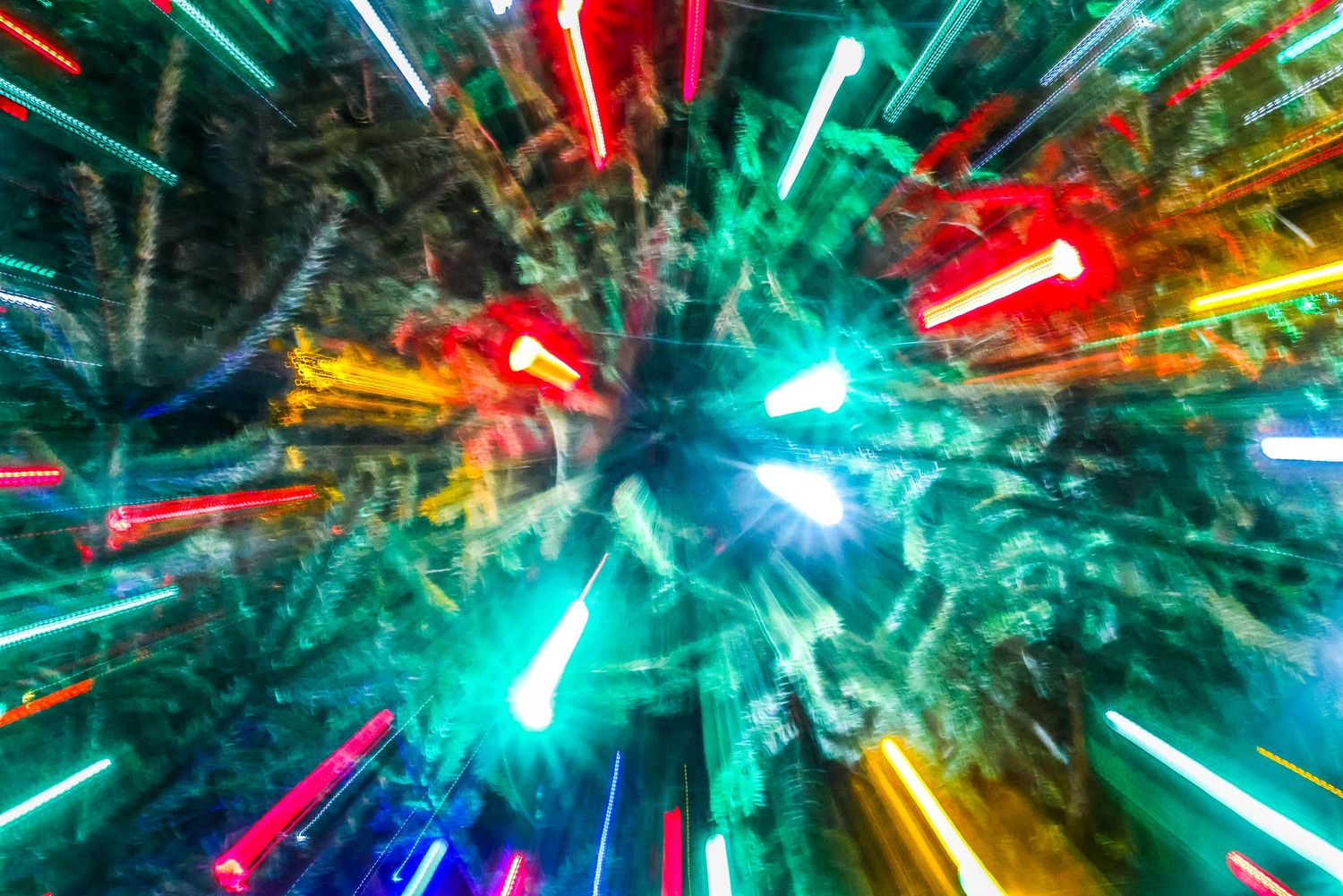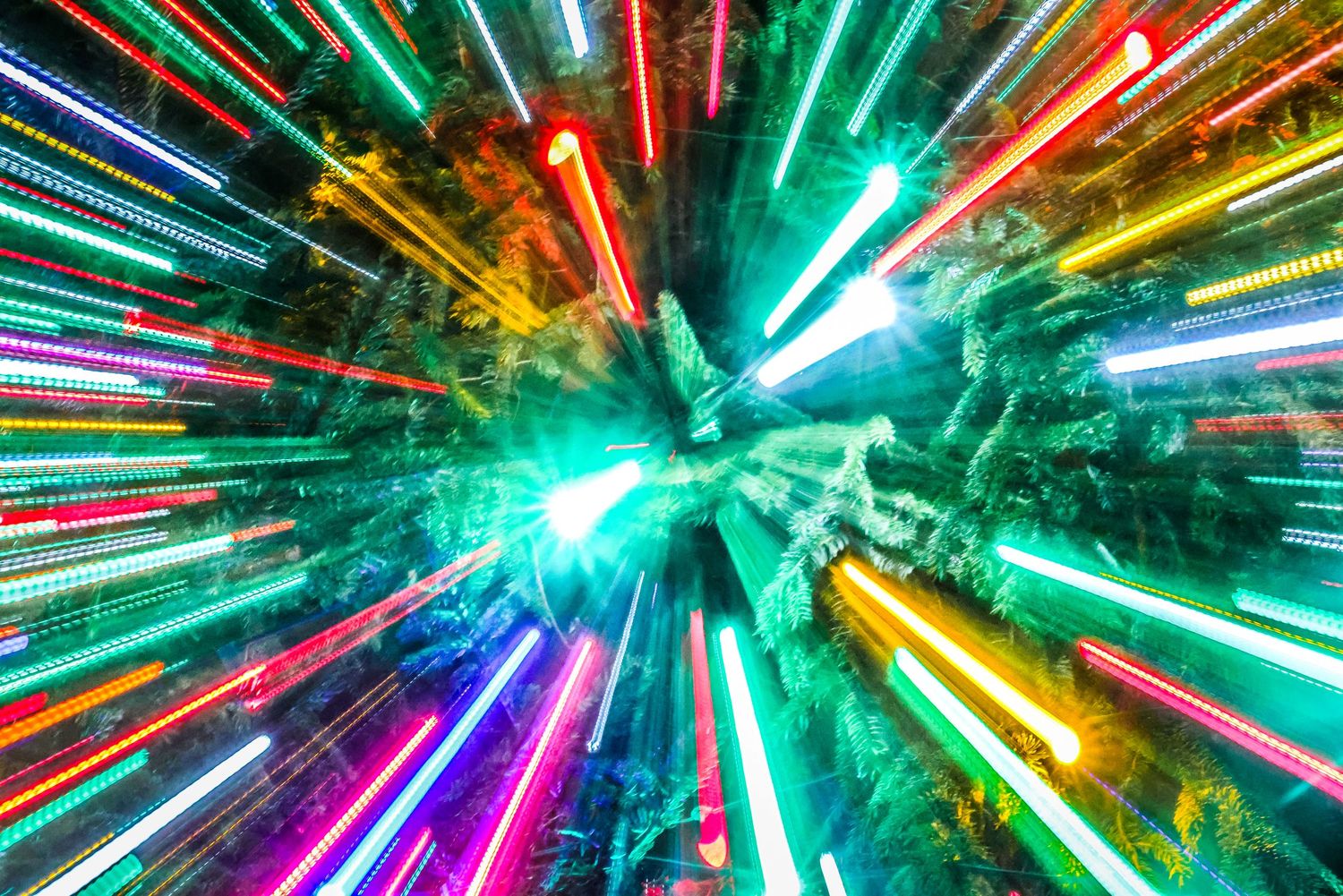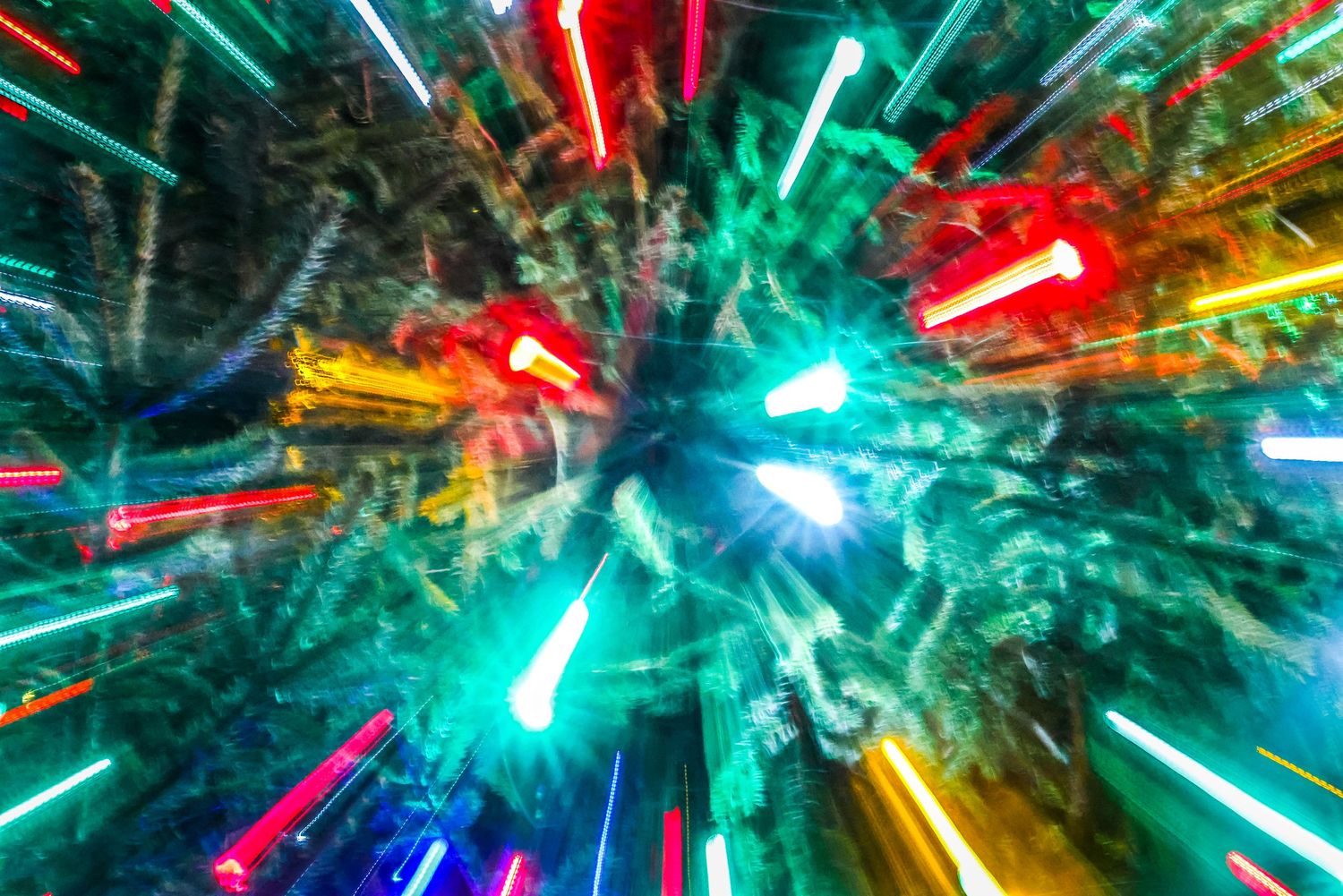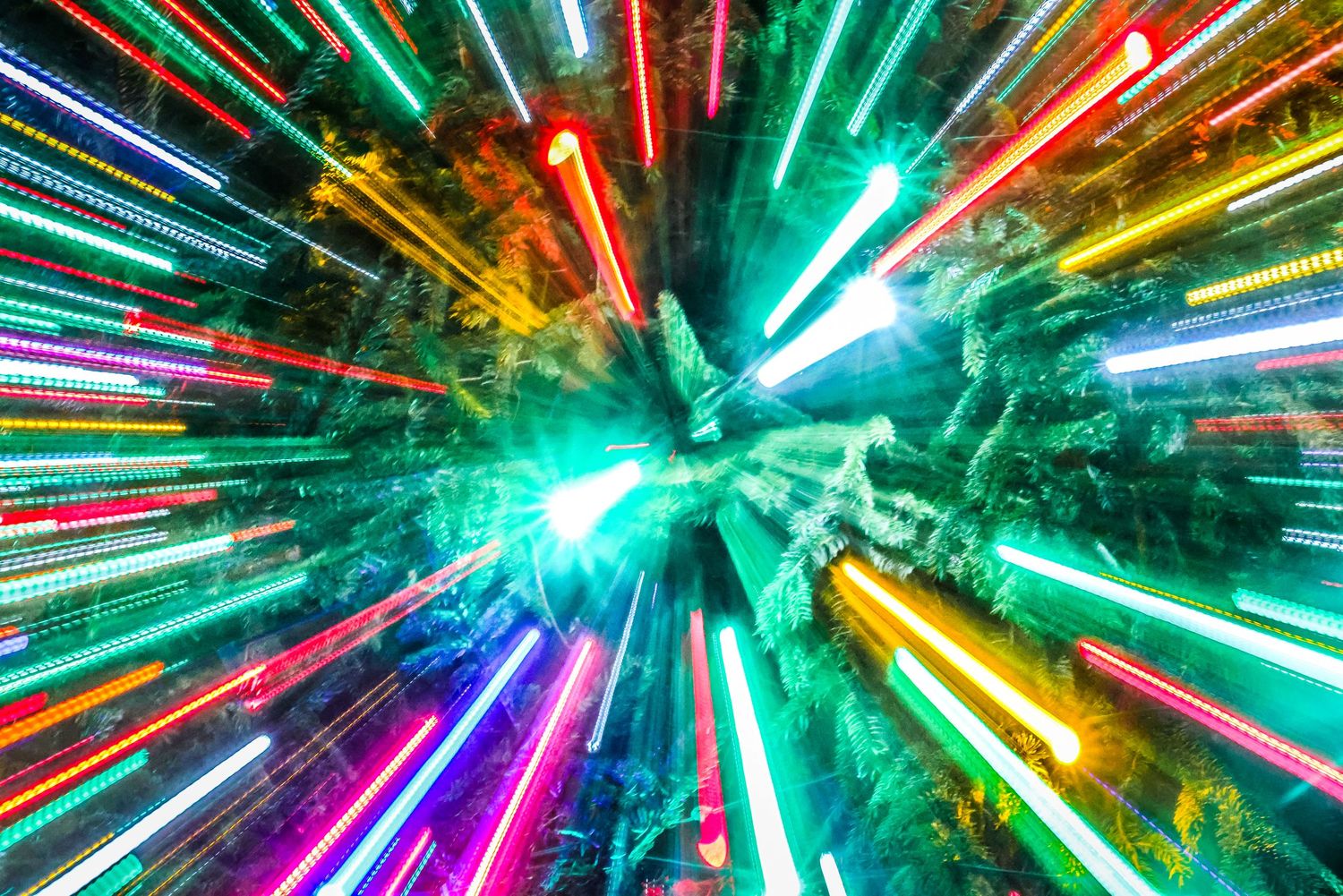
Every holiday season, I find myself drawn back to the lights. There’s something timeless and magical about Christmas displays—the colors, the glow, the way everything feels just a little more alive once the sun goes down. But instead of photographing lights the “traditional” way, one of my favorite creative tools is adding motion through the lens itself: the zoom effect.
What Is the Zoom Effect?
The zoom effect is created by physically zooming the lens during a long exposure. Instead of freezing the lights in place, the camera records their movement as streaks, pulling the viewer straight into the scene. The result feels almost like traveling through the lights—dynamic, energetic, and full of emotion.
It’s not about perfection.
It’s about emotion, movement, and atmosphere.
Why I Love Using It with Christmas Lights
Christmas lights already shine with nostalgia and warmth, but the zoom effect transforms them into something almost otherworldly. The streaks of red, green, blue, and gold feel like:
- Falling stars
- Fireworks made of holiday cheer
- A rush of memories from childhood winters
Each image becomes less about documenting a display and more about capturing how the season feels—fast, bright, joyful, and fleeting.
The Technique: How to Create the Zoom Effect
Where Emotion Meets Camera Control
This is where that “dreams in motion” look comes to life.
1. Find the Right Light Scene
Look for:
- Christmas light tunnels
- Decorated trees
- LED displays
- Any strong points of light against darkness
The darker your background, the more dramatic your streaks will be.
2. Use a Zoom Lens (This Part Is Non-Negotiable)
You need a zoom lens for this technique:
- 18–55mm
- 24–70mm
- 70–200mm
Prime lenses won’t work—you must physically zoom during the exposure.
3. Switch to Manual Mode
This gives you full creative control.
Starting Point Settings:
- Shutter: 1–3 seconds
- Aperture: f/8 – f/16
- ISO: 100–200
These settings allow the light to stretch cleanly without overexposing the scene.
4. Lock Your Focus First
- Autofocus on the lights
- Switch to manual focus
This prevents the camera from hunting in the dark while your shutter is open.
5. Create the Motion (This Is the Magic)
- Press the shutter button
- While the shutter is open, smoothly zoom in or out
- Finish your zoom before the shutter closes
Different motions create different emotions:
- Slow zoom = soft, dreamy streaks
- Fast zoom = bold, high-energy streaks
- Zoom in = light pulls toward the center
- Zoom out = light bursts outward
No two images will ever be the same—just like our holiday memories.
6. Tripod or Handheld?
- Tripod: cleaner center detail
- Handheld: looser, more abstract motion
Both results are beautiful—it just depends on your creative mood.
The Beauty of Letting Go of Control
One of the reasons I love this technique so much is that it forces me to let go. I can guide the camera with settings and movement, but the final image always carries an element of surprise. Some streaks are bold and clean, others soft and painterly. Every frame is truly one of a kind—just like the moments that create our holiday memories.
Photography doesn’t always have to be sharp and literal. Sometimes, the most powerful images are the ones that feel like dreams in motion.
A Reminder to Play
As photographers, it’s easy to get wrapped up in technical perfection and client expectations. But pieces like this remind me why I fell in love with photography in the first place:
to explore, to experiment, and to create something that makes people feel.
The holidays are the perfect time to step outside the box and try something new—whether that’s zooming through Christmas lights, shooting long exposures in the snow, or simply seeing familiar scenes with fresh eyes.
Because sometimes, the most beautiful images aren’t the ones that freeze time…
They’re the ones that let it move. ✨
📸❤️🌻